 |
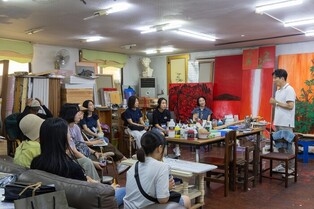
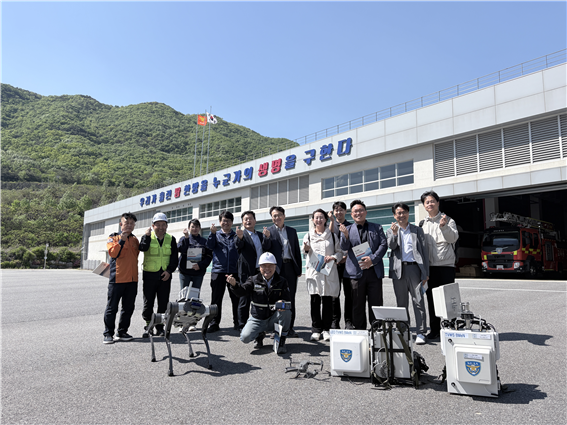
| ▲ 시연 참여 기관(사진: 이노넷(주) 제공) |
[매일안전신문=이종삼 기자] 지난 4일 중앙소방학교는 이동통신망이 붕괴된 재난 상황에서도 안정적인 통신을 유지할 수 있는 ‘소버린 저궤도위성(LEO) 백홀 배낭 TVWS 기반 4족보행로봇 재난 대응 플랫폼’ 시연을 성공적으로 진행했다.
중앙소방학교는 로봇 및 TVWS(TV White Space, TV 유휴대역) 배낭 장치(제조사: 이노넷)로 시연을 진행했으며, 국립전파연구원, 제천시청, 한국철도공사, 케이대응로봇, 엘림(주), ㈜리스크제로, 이노넷(주) 등 공공기관 및 관련 기업 관계자들이 참석했다.
이번 플랫폼은 저궤도위성 통신, TVWS 자가통신망, AI, 4족보행로봇을 결합한 통합 재난 대응 시스템이다. 특히 통신요금이 발생하지 않는 TVWS 기반 장거리 비가시거리 통신과 저궤도위성 백홀을 결합하여, 기존 이동통신이나 광케이블 인프라가 단절된 환경에서도 독립적인 통신망을 신속하게 구축할 수 있도록 설계됐다.
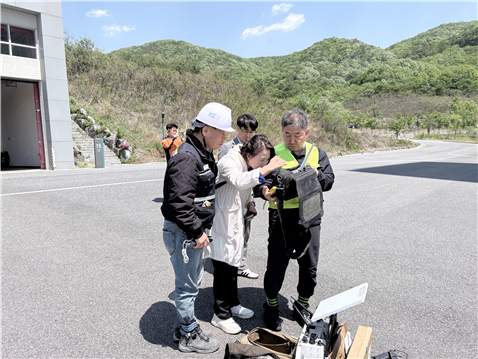 |
| ▲ 국립전파연구원 TVWS 장치 스펙트럼 확인(사진: 이노넷(주) 제공) |
이 시스템은 지상뿐 아니라 지하 및 건물 내부까지 연결되는 ‘끊김 없는 통신’을 구현해 재난 대응에서 가장 취약한 사각지대 문제를 해결한다. 실제 시연에서는 지하 환경에서 4족보행로봇과 배낭 이동기지국을 활용해 영상 전송과 통신 유지가 안정적으로 이루어지는 것이 확인됐다.
특히 이날 시연에서는 저궤도위성(스타링크) 구간을 VPN(Virtual Private Network)으로 터널링하여 소버린(주권형) 통신망을 구현한 점이 주목된다. 이를 통해 위성망 사용 시 제기되는 보안 문제를 해결하면서도 공공기관이 요구하는 폐쇄망과 인터넷을 동시에 활용하는 환경에서도 안정적으로 서비스가 구현됨을 확인했다.
저궤도위성으로 인터넷 망이 연결되는 현장에서 시연한 주요 항목은 국립전파연구원 TVWS 데이터베이스 접속 및 가용 채널 할당, 위성 백홀 기반 와이파이 서비스, 와이파이 자가통신망-이동통신망 무전기 통신 서비스, 자가통신망 드론 영상의 유튜브 실시간 스트리밍 서비스, 배낭 및 로봇 영상 실시간 관제 서비스, BLE 기반 작업자 위치 추적, 가스 센서 실시간 모니터링, 양방향 음성 통신 및 방송 기능 등이다.
최근 전 세계적으로 재난 규모가 대형화되면서, 기존 이동통신 인프라 의존 방식의 한계가 지적되고 있다. 이러한 상황에서 독립적인 통신망을 신속히 구축할 수 있는 기술은 국가 재난 대응 체계의 핵심 인프라로 평가된다. 이번 시연 플랫폼은 공공기관 및 기업 등에서 긴급 재난 대응 및 유지보수를 위해 긴급통신, 카메라 및 사물인터넷 서비스를 저렴하게 제공할 수 있는 이동 가능한 저궤도위성 백홀 TVWS 자가통신망 대안을 제시했다.
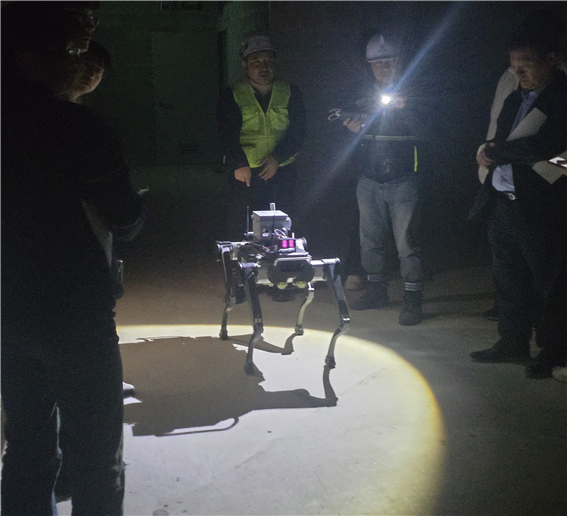 |
| ▲ 지하에 설치된 레인보우로보틱스의 4족보행로봇 시연(사진: 이노넷(주) 제공) |
시연을 주도한 중앙소방학교 권오덕 팀장은 “지하 재난으로 인한 통신 두절은 곧 인명 피해로 이어질 수 있기 때문에, 어떤 환경에서도 끊김 없는 통신을 요구하고 있다. 그렇지만 공공기관은 국가가 통제 가능 네트워크를 요구하기 때문에, 재난 상황에 실시간 대응이 가능한 소버린 네트워크 기반 배낭 제품 시연이 매우 의미가 있었다”고 강조했다.
올해 2월 TVWS 전파법 개정을 담당한 국립전파연구원 성주영 박사는 “구조기관의 신속한 의사결정을 통해 국민과 구조요원의 생명 보호가 가능하도록 다양한 비면허대역 규제가 크게 개선됐다”며 “오늘 시연은 개정된 제도가 실제 소방 현장에서 적용 가능한 사례를 보여준 의미 있는 자리”라고 평가했다.
이번 시연을 통해 ‘저궤도위성 백홀 배낭형 TVWS 자가통신망 기반 로봇 서비스’ 기술이 급속하게 증가하고 있는 글로벌 긴급 재난 및 유지보수 시장 진출 가능성을 확인했다. 또한, 대기업 로봇 업체와 중소기업이 협력하여, ‘K-통신 기반 TVWS 재난 대응 솔루션’의 새로운 산업 영역을 개척하고 글로벌 재난 대응 시장 진출 가능성을 보여준 사례로 평가된다.
다음은 위 기사의 영문판이다.
National Fire Service Academy Demonstrates Disaster Response Platform Based on Sovereign Satellite, TVWS, AI, and Robots
|
| ▲ Event Participating Institutions(photo courtesy of INNONET) |
[Maeil Safety News = Reporter Lee Jong-sam] On May 4, 2026, the National Fire Service Academy(NFSA) successfully demonstrated the “Sovereign Low Earth Orbit (LEO) Satellite Backhaul Backpack TVWS-based Quadruped Robot Disaster Response Platform,” which is capable of maintaining stable communication even in disaster situations where mobile communication networks have collapsed.
NFSA conducted the demonstration with the robot and TVWS backpack devices(manufacturer : INNONET), and officials from public institutions and related companies, including the National Radio Research Agency (RRA), Jecheon City Hall, Korea Railroad Corporation, K-Response Robot, Elim, Risk Zero, and INNONET, attended the event.
This platform is an integrated disaster response system that combines low-orbit satellite communication, a TVWS local network, AI, and quadruped robots. In particular, it is designed to rapidly deploy a local network even in environments where existing mobile communication or fiber optic infrastructure is disconnected by combining TVWS-based long-range non-line-of-sight communication, which incurs no communication charges, with low-orbit satellite backhaul.
|
| ▲ RRA Spectrum Verification of Backpack TVWS Device(photo courtesy of INNONET) |
This system resolves the issue of blind spots—the most vulnerable aspect of disaster response—by implementing "seamless communication" that extends not only above ground but also underground and inside buildings. During the actual demonstration, it was confirmed that stable video transmission and communication maintenance were maintained in an underground environment using a quadruped robot and a backpack device.
Notably, the demonstration on this day highlighted the implementation of a sovereign communication network by tunneling the low-orbit satellite (Starlink) segments via a VPN (Virtual Private Network). This resolved security issues associated with using satellite networks while demonstrating the service in a communication environment that utilizes both a closed network and the internet, as required by public institutions.
Key items demonstrated at the site where the internet network is connected via a low-orbit satellite included: access to RRA TVWS database and allocation of available channels; satellite backhaul-based Wi-Fi services; local Wi-Fi network-mobile network radio communication services; YouTube real-time streaming of drone footage from the local network; real-time monitoring services for backpack and robot footage; BLE-based worker location tracking; real-time gas sensor monitoring; and two-way voice communication and broadcasting functions.
Recently, as the scale of disasters worldwide has increased, the limitations of relying on existing mobile communication infrastructure have been pointed out. In this context, technology capable of rapidly installing local networks is considered a core infrastructure for national disaster response systems. This demonstration platform presented a mobile low-orbit satellite backhaul TVWS local network alternative that can provide affordable emergency communication, camera, and IoT services for emergency disaster response and maintenance in public institutions and companies.
|
| ▲ Quadruped Robot Demonstration of RainbowRobotics in Underground(photo courtesy of INNONET) |
Team Leader Kwon Oh-deok of NFSA, who led the demonstration, emphasized, “Since communication disruptions caused by underground disasters can lead directly to casualties, there is a demand for uninterrupted communication in any environment. However, because public institutions require networks that the state can control, the demonstration of a backpack product based on a sovereign network capable of real-time response to disaster situations was highly significant.”
Dr. Sung Joo-young of RRA, who was in charge of the revision of the TVWS Radio Waves Act in February 2026, assessed, “Various regulations on unlicensed bands have been significantly improved to enable the protection of the lives of citizens and rescue personnel through rapid decision-making by rescue agencies.” He added, “Today’s demonstration was a meaningful occasion that showed a case where the revised system can be applied in actual firefighting situations.”
Through this demonstration, the potential for the ‘low-orbit satellite backhaul backpack-type TVWS local network-based robot service’ technology to enter the rapidly growing global emergency disaster and maintenance markets was confirmed. Furthermore, this is considered a case where a major robotics company and a small and medium-sized enterprise collaborated to pioneer a new industrial sector for ‘K-comm-based TVWS disaster response solutions’ and demonstrated the potential to enter the global disaster response market.
[ⓒ 매일안전신문. 무단전재-재배포 금지]